Showing posts with label SEO Tips. Show all posts

April 27, 2009

Delisting 101: Bad Webhosting Can Even Get You Banished From Google

. April 27, 2009 .

You thought cheap webhosting was a bargain. Maybe … but bad webhosting isn't just a bummer — it can get you delisted, added to badware lists, etc.

And it doesn't have to be your fault (directly, anyway).

rip seo

Use IX Web Hosting | ixwebhosting.com web hosting at your own risk. One day you might just get hacked and/or defaced. Even worse, you might be — courtesy of some Turkish hacker — installing malware on users' computers by proxy. The hackers seem to be pretty good, if a little mean. Fix it, and then it just might happen the next day anyway. That seems to be the story reported everywhere.

A few associates of mine have — they got hacked … and finally delisted.

Now that's OK. People get hacked all the time because of their own incompetence. But at least one of them that I know has a totally static web site. That leaves brute force and/or password sniffing cleartext passwords. Both are unlikely en masse.

So it's that, or your web host *itself* is hacked!

A possibility. I found this all suspicious. I Googled it. What I found is absolutely appalling —

Hundreds and hundreds of hacked domains, with a similar vector.

Some of these people are upgrading often and responsibly, using custom applications, etc.

The same vector simply can't apply to everyone's web sites. They're running various applications with various flaws. So that's unrealistic. Some had weak passwords, I'm sure — but so many? Hence, it's more likely that it's an underlying problem with the web server. IX continues to tell everyone to use stronger passwords, upgrade their anti-virus software (¿que?), and be more careful. As if key-loggers are that common? Um no.

Maybe they should take their own advice and tighten up their own boxes before blaming the user. The users are reportedly get hacked over and over — and over. Scary. So all of them have the same flawed anti-virus application, and use weak passwords? No. Probably not.

If your web host gets hacked, you're at their mercy. So they'd better know a thing or two about security. But you paid $2.99 per month, did you? Bad move. That was your mistake.

Several References:
http://ixwebhostwarning.wordpress.com/
http://forums.applenova.com/showthread.php?t=18025
http://www.vistainter.com/reviews/I/ixwebhosting.com/
http://kuscsik.blogspot.com/2008/01/ix-webhosting-default-backdoor.html
http://www.webhostingtalk.com/showpost.php?s=01a9f3f779beec5274cdc25a9856c8e0&p=5396336&postcount=13
http://www.webhostingtalk.com/showthread.php?p=5403583#post5403583
http://hostjury.com/reviews/IX-web-hosting
http://forum.joomla.org/viewtopic.php?p=1422266&sid=72538fc95043a14ad091c82e0f161195#p1422266

Find more:
http://www.google.com/search?hl=en&q=ixwebhosting+hacked&btnG=Search

The worst part is, when you get hacked courtesy of their lackadaisical security, they throw up a monetization page while you're down. So they're profiting while you're getting delisted and Google thinks you're either dead, hacked, or someone snapped up your domain to monetize old links and random traffic. Awesome IX … awesome.

That's some pretty lousy SEO. Cheap web hosting can really be the end. Google might notice of course, and give this lot (of presumably similar IPs) a second gander. But what if they don't?

So bad web hosting can't just lead to downtime. It can lead to permanent exile from Google, and getting on the spyware/badware bad-list for a long, long time. And then R.I.P. everything. Kiss it all goodbye … all thanks to $2.99 hosting.

Read More..

Non-Obvious Things eCommerce Can Do When Rankings Implode

.

Your friendly Captain-obvious-inspired search marketer might argue you shouldn't have done so when you depended on your organic rankings so much — but they're almost certainly vulnerable too. Let's face it. It's just plain difficult to get natural referral traffic when you're ultimately just another guy selling commodities. OK, so don't be just another guy selli … nevermind. They're hypocrites. So what can you do?

1. Move Goods On eBay With Help Of Automation

eBay, except for some upfront infrastructure costs and smaller up-front listing costs, is pay-per-conversion. That should make you salivate. Unfortunately, it's generally a total pain to sell on eBay. Automation with their API can streamline it substantially. We offer our eBay integration module as an option for our eCommerce customers. The module lists items from their product database with a few clicks, and it can auto-relist as well. It's certainly a bear to set up, but once it's running, it's as beautiful as Captain Obvious herself. You can save time (and money — Captain Obvious speaking again) by automating monotonous work.

Templatized listings improve your image and make your manually-listing competitors look amateur. Lastly, it can help by generating more volume even if margins are tighter.eBay used to be a place where you sold the baseball cards in your attic. It's now basically just another venue to sell — whether it be baseball cards or your particular commodities. If you're not selling on eBay, you're not exploiting a potentially very profitable venue with a quasi-pay-per-performance cost schedule.

2. Shopping Feeds + ROI Tracking

Google Shopping is 100% free. So if you're not doing that, start there. Then move to the non-free feeds. You can target only those products that seem to convert or for which you have some sort of deal. Make sure your categorization is correct, as this can make a difference. Our shopping feed module maps product categories to feed categories automatically based on some configuration settings. It also lets you exclude certain listings for paid feeds that aren't profitable. Then you can integrate with Google Analytics and optimize from there. We find this to be easier and less risky than dealing with PPC.

3. Wait Patiently; Improve Site For People

It's not so obvious that this is the best time for usability experiments, but it might be. Ultimately it's people who convert, not search engines — and there's always room to improve your checkout page. We often suggest redesigns, reskins, and improvements when rankings fall. It's not necessarily the obvious time you think to do it, but it's frequently the best time to make changes that you'd otherwise hesitate to do.

For example, here's a new checkout mockup we're prototyping —

Read More..

April 25, 2009

Google PageRank Doesn’t Matter. Can We Stop Talking about it Now?

. April 25, 2009 .

I build websites and develop them for fun and profit. The wellspring and catalyst for both factors is people or what we call traffic.

The more people visit my web site, the more money I can possibly make, and perhaps the more fun I can possibly have.

Today, many websites had their Google PageRank reduced and many bloggers have been speculating about the causes.

Introspection is often forced. We don’t think about sustainability and our actions until unfavorable circumstances arises. If you only consider how a PageRank shift will negatively affect you after it has happened, you’re already screwed.

It’s all very simple to me. Google is an factor that is outside of your control. Sure, you can follow their rules or adjust your behavior to fit in but that still doesn’t put Google within your palm. What do good entrepreneurs do with uncontrollable factors? They create what-if contingency plans to accommodate for possible loss.

Keep this point in mind: People can do whatever they want to you and they often will. You however have the power to determine how you want to react to their actions. Google will adjust its PageRank scores in a way they deem fit (it’s their toy after all) and ultimately you must decide how you will cope with the possible results.


If your ad revenue is affected just because PageRank changes, then you’re not doing something right. Not exploring the right monetization options. Not having a long term business plan. Not making full use of the traffic you have. Not getting the right advertisers who know the value of your site.

And all these are factors within your control. Who cares what Google thinks about content or site quality? People are the ones who visit your site and decide if its worth reading or recommending to someone else. Google doesn’t own the way you write or think. They don’t influence the type of content you decide to put out.

I have never sold an ad based on my meager PageRank. Advertisers have approached me and have told me directly that they are interested in my websites because I rank for key terms relevant to their business and because I easily pull in a heck of a lot of targeted traffic that is likely to convert. And that’s what matters.

So what if PageRank weakens your position on a ranking list or advertising network? You don’t need systems that use PageRank as a metric for measuring comparative value. Really, you don’t need them at all. There are literally hundreds of different ways to build your brand and get valuable traffic from a variety of other sources.

Stop complaining. Pagerank is simply a webmaster fetish. It’s a inside joke that’s gone too far. Washington Post and Forbes were penalized. But do you really think Aunt Mary or Uncle Joe will give a toss about it? They’ll still type in the URL or click on the bookmark icon faithfully because they want to get the info-fix they need.

And that says a lot about creating remarkable brands that are trusted by your target market. Brands that bring in direct repeat traffic in the long run, despite unpredictable algorithm changes by corporations beyond comprehension.

I don’t see any point in blogging about PageRank drops or updates (yes, I’m guilty). I really didn’t want to write about this but I just couldn’t help ranting after seeing so many oh my god Pagerank dropped! posts all over the web today.

Read More..

Brian Pasch Invites NJ Business Owners To Free SEO and Internet Marketing Briefing

Pasch, CEO of the Pasch Consulting Group, is holding a free SEO and Internet Marketing briefing in Red Bank on April 28, 2009 at 6:30pm. The event will cover the most cost-effective and results oriented Internet Marketing Strategies for New Jersey business owners.

There are only a few spots left for New Jersey business owners to register for the Executive SEO Briefing that will be held at the Red Bar and Lounge. The Executive Briefing is free but participants must signup in advance using this special registration link: http://biznik.com/events/internet-marketing-best-practices.

“In a challenging economy, executive officers and business owners are looking for cost effective ways to promote their businesses, and Internet Marketing should be tops on their list”, says Pasch.

Brian will discuss how business owners can leverage the hottest online tools like Facebook, Twitter, press releases and social networking sites to grow their customer base.

If you would like more information regarding this event, contact Carrie Valentine at 732-450-8200 or email at carrie@paschconsulting,com. Additional event information is also provided on the registration link.

There will be a cash bar and food will be available. Attendees are responsible for their own food and drinks. Red will be featuring a ½ priced wine by the bottle special for those dining after the mixer.

About Brian Pasch of the Pasch Consulting Group

Brian Pasch, CEO is an 18-year veteran of the direct marketing industry. His career has spanned both management and technology roles. PCG continually tests new digital marketing strategies which can provide a cost effective channels for business advertising and lead generation. Brian Pasch and his staff are currently rating the effectiveness of the top social networking and blogging portals.

PCG works for and with an ever-growing number of business large and small from all over the country to maximize results of their digital marketing efforts.

Read More..

UK politicians use SEO for rebuttal

.

UK politicians use SEO for rebuttal


The UK's Conservative party used search engine optimization (SEO) tactics to draw viewers to its rebuttal of Alistair Darling's budget proposal
If there was ever any question about the power of search engine optimization (SEO) it should be long gone after news has surfaced that politicians in the UK are using keywords to draw online viewers to their website.

The UK's Guardian newspaper reports that in an attempt to gain viewership to its "live rebuttal" of the Labour Party's budget on Wednesday, the UK's Conservative party purchased numerous keywords which would redirect people searching for terms related to the budget.

Jeremy Hunt, one of the Conservative members of Parliament, said the party chose this tactic because so many people go to Google to learn more information about something like a budget proposal.

"We understand that it's important for us to serve up our views in different formats, and Google is one of the first places people go to when trying to find information on a given subject," he told the paper.

Hunt went on to say that the group's recent foray into search engine optimization (SEO) is " a perfect example of how political parties should be using the internet."

It would appear that the UK is ahead of the curve in terms of using search engine optimization (SEO) for things beyond the business world. Recent reports noted that the government's Office of Security and Counterterrorism would be teaching search engine optimization (SEO) to some Islamic groups in an attempt to reduce the ranking of so-called "radical Islamic" organizations.

Read More..

April 24, 2009

8 Ways On How to Dominate Google using Search Engine Optimisation

It is very important to know how to improve your Google rank, usingsearch engine optimization and is a vital part of being successful with your websites. Most people use search engines to find what they’re looking for, Google is the leading search engine. If you want people to find your site on the internet, you need to use SEO in order to get high search engine rankings. These eight tips will help you achieve that.

1.Develop good content!


As the saying goes, content is king. The importance of having high quality, relevant content that is updated regularly cannot be understated. If you have a quality website, it makes all the other steps easier.


2.Write articles


Submitting articles has become one of the most popular methods to drive traffic to your website. Not only do the articles generate traffic, they provide non-reciprocal links, which are the most valuable kind of links according to Google’s ranking system. Make sure the content is relevant to your site, and that the quality of writing is as high as what is on the website; these articles are your best advertisement for what your site has to offer.


3.Use smart, targeted keywords


Keywords are the words and phrases that people type into a search engine to find what they’re looking for. The keywords you choose will define your site and who see it. Know your niche and who you want to reach. Research your target audience, research your competitors, both successful and unsuccessful and learn both from their successes and mistakes. You can also maximize your keywords by optimizing different pages within your website to different keyword phrases.


4.Use directories


Directories are a fast and easy way to get non-reciprocal links. There are hundreds of directories that you can submit your URL to for free. It is time-consuming, but this search engine optimization tool is worth it for the traffic it builds and how it will improve your Google rank. Most directories are edited and maintained, and your posting must be approved. While the sheer number of directories may seem daunting, try applying to 5 per day – you’ll have over 1500 listings after a year.


5.Don’t forget your meta tags and HTML code


While optimizing your website content for the proper keyword density is an obvious choice, don’t forget about the text that you don’t see, but Google does. Good search engine optimization includes adjusting all of your meta tags and HTML code to also reflect your chosen keywords. If you have a website about dog breeds, why label a picture “photo 1” when you can label it “purebred Yorkshire Terrier at play”. These are a great way to up your keyword density without making the content sound unnatural.


6.Use PPC advertising


Pay-per-click advertising is not the steal it once was, with popularity of the search engine optimization tool driving prices up, but it can still be a valuable and cost-effective method of improving your ranking when used properly.


7.Get a site map


An easy way to make the most of your search engine optimization is to ad a site map to your website. You can either have an actual webpage that can be used by both your viewers and Google, or you can also use an XML file, which, while not visible to the public, will also Google to easily spider your site. Google offers free tools and scripts to help you easily build a site map.


8.The last point, number 8 is the most important: TAKE ACTION.


All the reading in the world, all the research in the world means nothing if we do not take action; massive concerted action using a plan that includes all of the other 7 points.

Read More..

The Search Engine Optimization for Beginning guide

The Internet is the biggest place that you can go to buy or sell anything. There are always people looking to make a purchase so it makes sense that if you have a business you should strategize to market to them. There is an almost constant supply of people who are ready to buy what you have to offer. The trick is getting them to notice you.

Search engine optimization is a great way that you can generate additional customers to your online business. When people do an online search they use a search engine. There are literally thousands of websites for people to choose from when they get the results. You need to ensure that your website comes up in the top of the search engine results.

There is interesting studies done that prove that most visitors to websites don’t make a purchase on their first time vesting your site. You need to get as many people to your website as possible. You can do this by increasing your site on the search engine results by using search engine optimization. One key strategy to use to keep people returning to your site is to provide visitors with lots of free information that they can use.

One way to help drive your website up higher in the searching lists is by using search engine optimization. Search engines use special software that reaches out and locates the keywords and Meta tags from websites all around the Internet. They take this information and based on the keywords will rank the sites. These rankings are how the results will be given to people who enter those words during a search.

Meta tags are important because they indicate what your site is about while providing the terms that are used for searches. You’ll sometimes see Meta tag phrases appear on the search results as well as on the top of the site pages. Meta tags are made up of a couple of sentences or groups of words (keywords) that describe your site. Meta tags are typically less than 25 words and are used by the search engines to rate your site.

The keywords are important because this is how you will be ranked. Most people never look beyond the first couple of pages of returned results of an online search. This means that you must get your site in the top three ranking pages in order to be successful at search engine optimization and drive business to your site. The most important page of your site is your home page also sometimes called your “landing page”.

It is of utmost importance to properly choose your keywords. These words, if chosen properly, can actually help to drive business to your site. Do not take search engine optimization lightly. Keywords need to be specific. They can also be phrases rather than one single word. Try to narrow down your keywords so that you’ll get the best results from search engine optimization. For example a travel site may consider using keywords like “travel” or “vacation” yet the resutlst for these broad terms will be enormous. Instead, narrow your keywords down making them as specific as possible. In this case you could use “Bahama cruise” or other much more specific search terms.

There are literally hundreds of keywords that could probably be used to describe your site and products. However it is important to reduce your list by choosing the ones that are most important and using them as both keywords on the copy of your website and in Meta tags of the pages. When you can get the hang of search engine optimization you’ll be able to greatly increase the visitors to your site and therefore create more sales. If you are unsure about using search engine optimization on your website hire a good SEO company to take care of your online marketing needs.

Read More..

Search Engine Optimization 10 Mistakes you shoud know

Here are the Top Ten Mistakes in Search Engine Optimization:

1. Wrong Keywords are targeted – this is the most common mistake in Search Engine Optimization, even most experienced Search Engine Optimization experts make it. Most of the keywords chosen by the people for their websites are descriptive for their website, but they are too far from average users mind. For example for a relationship website the keyword ‘relationship guide’ won’t work even tough it contains the keyword ‘relationship.’ On the other hand ‘dating advice’ will work easily.

2. Using Java Script Menus – search engine do not read JavaScript, so build your website accordingly. You should go for sitemap i.e. putting your links in a noscript tag. Once doing so all your links will be crawable.

3. Flash website without html as alternate – one thing you should remember is that flash websites are attractive but not to search engines. If you want your Flash based website to be loved by the search engines then provide an html versions. The reason why search engine don’t like Flash sites is because spider can’t read Flash content and therefore can’t index it.

4. Title Tags are ignored – very often people leave <> tag empty. Instead leaving it empty this is one of the best place to have a keyword, because it not only help you out in optimization but also the text in the <> tag shows in the search results as your page title.

5. Meta-tags are past – it is a common myth that Search Engine Optimization is all about getting your Meta keywords and description correct. Meta tags are long gone now they are past and don’t except your website will be ranked well because of adding Meta keywords and description.

6. Ignoring URLs – URL plays an important role in your websites promotion. It is possible to have high rank even without keywords in the URL. But if you have keywords in the URL, (file name, domain name as part of the URL) gives you an additional advantage. For MSN and Yahoo keywords in URL are more important. Even for Google weight of URLs with keywords is more than that of the URLs without keywords.

7. Less keyword in content – put keywords wherever it makes sense and focuses more on keywords. It will be better to highlight them or make them bold.

8. Choose backlinks wisely – one of the most common fallacies is that more backlinks are always better. Because of this many web masters go for links with forum, newsgroup, link farm etc. ultimately leading the site to be banned. What you really need is quality backlinks.

9. Images for Headlines – an image in the headline can make your website look unique, but not in terms Search Engine Optimization. For search engines images in menus and headline are big mistakes because menu links and h2, h2 tags are important for SEO. If you are not sure how your h1, h2 tag will look like or you are afraid of that it will look horrible, try improving or modifying them in stylesheet instead of going for an image.

10. Consistency and maintenance – in the last but not least, most important to get rank in search engine is daily updates. To be successful optimize your site permanently and keep an eye on competition.

Read More..

April 23, 2009

The SEO Trends for 2009 you should Read and Know

. April 23, 2009 .

search engine marketing  and SEO trends 2009


Following the pace of change relating to search engine optimization — or SEO as it’s often called — can be dizzying.


Sure, there are landmark changes every once in a while that almost everyone hears about; Google’s introduction of “universal search”, in May 2007, is one example.


But Google says they made more than 400 changes to the ranking algorithm last year. Who can keep up with that?!


Luckily, you don’t have to keep up with every detail. But there are some important SEO trends you should know about as we go further into 2009. I’ll break the list down into two sections — Strategy and Tactics and Industry/Big Picture Trends - and then turn it over to you at the end.


Industry/Big Picture Trends


1. Increased SEO Awareness


SEO used to be something akin to voodoo; the only people who understood it were the ones doing it. But now it seems everyone knows about SEO. (Heck, even Wal-Mart offers SEO services!) As more small business owners become aware of what SEO is and why you should be doing it, competition should increase and put a premium on smart decision-making when it comes to doing SEO in-house or hiring a consultant.


2. Moving SEO In-house


On that note, in-house SEO has never been more popular than it is now, and that trend should continue into 2009. The upcoming SMX West search marketing conference even has an entire day devoted to in-house SEO. Companies big and small are recognizing the need for and value of having dedicated staff to recommend and implement SEO strategies.


3. SEO Consultants and Firms Booked Up


Many of us who don’t work in-house have never been busier than we are now. Because of trend No. 1 above, small business owners are hunting far and wide for SEO help. Purely anecdotal evidence, but something that many fellow SEO friends are experiencing: I usually get 2-3 emails a month from small business owners looking to hire an SEO. Last week alone I received five. There’s big demand and a lot of SEOs will be booked up.


4. It’s Google’s World


Google has dominated the SEO landscape for years, and their lead over Yahoo and Live Search is only getting bigger. There are several companies that try to track market share, and their numbers differ. But they all agree that between 60-70% of searches happen at Google. That doesn’t mean you should put all your SEO eggs in Google’s basket, but it does mean if you’re not being found on Google, you’re not being found.


5. SEO Tools & Automation


Hoping to take advantage of the growing interest in SEO, and the difficulty in finding the right consultant, more companies and individuals are creating online tools that automate portions of an SEO analysis. While some of these tools offer helpful data at a basic level, what matters most is how you use the data they provide.


6. SEO Scams


The downside of increased interest in SEO is that many small business owners will continue to spend money making unethical scam artists rich. $99/month for 500 directory links? $200 for search engine submission services? Don’t do it. Read what several search industry leaders had to say about SEO scams, and make sure this is one trend you avoid in 2009.


Strategy & Tactical Trends


7. Content = Authority (Still)


Links are the currency of SEO, and content is what attracts the links you need to rank well. When you rank well, you have authority. If you run a service-based business, you must be giving away your knowledge and expertise in the form of articles, blog posts, or other unique content that will attract links. If you run a retail web site, this still applies. Follow Amazon’s lead; I think they’re the SEO-smartest retailer online.


8. Content Variety


I mentioned Google’s universal search at the start of this article, and other search engines have also been providing blended results for some time. What this means is that the Google search results page is no longer a list of 10 web page links; it now includes videos, news articles, blog posts, images, and more. In turn, this means that SEO isn’t just about tweaking your web site; it’s about creating and optimizing whatever forms of content make sense for your business and industry.


9. … Especially Video


The numbers are astonishing. YouTube gets more searches than Yahoo. About 100 million people watched videos on YouTube in October, and the average viewer watched 92 videos that month. eMarketer just reported that video is the number one tactic that US marketers will be focusing on in 2009. If you’re not doing it, chances are your competition will be.


10. Personalized Search Results


Personalization of search results has been simmering for a couple years now, but has started going mainstream recently. Google is leading the way with things like SearchWiki and Preferred Sites. Plus, things like your location, your recent searches, and which datacenter your search gets sent to can also impact the 10 search results you see at any given moment. It will continue to become more unusual to see the same 10 results when you and a friend in another state do the same search.


This renders ranking reports borderline useless. In other words, it’s no longer about whether your business is ranking for a certain search term at, say #2 in Google. Traffic and conversions are what you should be tracking, not what number you rank at for a specified term.


11. Local Search and Mobile Search


Mobile search has been on the way for years, but it never arrived. Until now. Mobile search used to be as fun as root canal, but the growth of smartphones - fueled by the iPhone - means mobile search is more enjoyable, more productive, and more popular than ever before. If your business appeals to people who might be searching on the go, local SEO should be a high priority for you in 2009.


12. Value of Your Audience and Community


Social media (sites such as Facebook and Twitter) isn’t going anywhere. And more of your potential customers are using it to make connections. You should be, too. By being active in online communities, you can develop an audience (look at the 38,000 followers Zappos has on Twitter!). When you do it right, that audience will help you push out your content (see No. 7 above), link to your content on occasion, tell their friends about you, and become your de facto marketing department.


Few small businesses will suddenly find themselves with 38,000 Twitter followers, but don’t underestimate the value of connecting with even 25, 50, or 100 people in the right online community.


What Others Say


Speaking of community: While writing this article, I asked my audience of Twitter followers to share their thoughts on SEO Trends for 2009. Here’s what they said.


@jfaris

@jfaris

@midnighttango

@midnighttango

@MikeTek

@MikeTek (read this one from the bottom up!)

@SimonHeseltine

@SimonHeseltine

@FrankReed

@FrankReed

@lucasng

@lucasng

@Matt_Siltala

@Matt_Siltala

@karriflatla

@karriflatla


They’ve had their say. I’ve had mine. Your turn: What SEO trends do you expect to see in 2009?

Read More..

How Using Website Analytics To Measure your SEO Success

I’ve previously discussed why rankings are a poor measure of success, but only touched upon how to instead use web analytics to measure SEO success. My hope is that once you have a good grasp of what to review and how to use that info, you’ll be more inclined to wean yourself (and your clients) off rankings reports once and for all!

For purposes of this article, let’s assume that you’ve already optimized your website for a number of keyword phrases across a variety of pages within your website. Let’s also assume that you’ve kept a list of those phrases handy, as you’ll need to refer back to them. In addition, let’s assume you’re using Google Analytics since more companies appear to be moving in that direction.

While heavy-duty analytics programs can be quite daunting at first because there’s so much data provided, for SEO purposes you can concentrate on just a few key areas when starting out. The place to start is the “traffic sources” section—more specifically, the “search engines” and the “keywords” sub-sections.

Clicking on the search engines sub-section will show you all the search engines that brought visitors to your website. If you’re running AdWords campaigns, be sure to click the “non-paid” link so that you can differentiate your organic traffic from your paid (you will have had to previously linked your Adwords account with your Analytics account in order for this to work). If you’ve done a decent job with your SEO, you’ll likely see most of the search engine traffic comes from Google, then Yahoo, then MSN with a bunch of smaller search engines trailing behind.

GA1

You can see how you’re doing with your keywords in all the search engines as a whole by then clicking the “dimension” dropdown box, and setting it for “keywords.”

This will show you all the keyword phrases that drove traffic to your website. As above, if you’re also doing paid search campaigns, be sure to click the tab that says “non-paid” so that you’re only looking at organic traffic. Depending on how many keywords are showing up, you may want to change your settings to show you 100 rows at a time (or more) so that you can have a good snapshot. By default, you’ll see the keyword phrases that have brought the most traffic at the top.

Are you seeing the keyword phrases (or some variation) for which you originally optimized? If they are not readily apparent, scroll down to the bottom and put an exact phrase or a word from one of your optimized phrases into the “find keyword: containing” box. Searchers use a variety of phrases at the search engines so you’re likely to see numerous related phrases that go beyond the exact ones for which you optimized. This is a good thing, and something that you don’t get from ranking reports.

For example, when reviewing the keyword phrases driving traffic to one of our clients’ websites, I found over 100 variations of one phrase for which we optimized, and they were all highly relevant to what the client offers.

GA2

Next, you’ll want to see which pages of your site are bringing keyword traffic and whether they are the specific ones for which you optimized. To view this, click on the “content overview” section and then on the right hand side of the page, under “landing page optimization” click on “entrance keywords.” This allows you to view specific stats for each page of your site.

The first screen is the entrance keywords for the page that receives the most pageviews (typically your home page), but you can click to other pages via the drop down box that says “content.”

GA3

If you don’t immediately see a page for which you are interested in viewing entrance keywords, you can type a word that you know is in the URL of that page in the search box that’s contained in the content dropdown. So if you’re looking for a page that has a file name of /green-widgets.php you can type just “green” or “widgets” into the search box and you’ll see all pages that have that word in the file name.

Now you should be able to see all the entrance keywords for that page. Are they ones (or variations of) those for which you optimized? If so, then your SEO is taking hold! If not, you’ll want to determine why. Perhaps it’s just too soon after your SEO work was completed. Perhaps they’re highly competitive phrases which will need more anchor text links pointing in.

Rankings don’t always equal traffic, and vice-versa

Something interesting that I’ve noticed a lot lately is that while my optimized pages are getting good search engine traffic for their optimized keywords, they may not show up in Google when I do a spot check of rankings. This is especially true of newly optimized pages. It seems that this could very well be personalized search in action. While I might not see the pages ranking in Google, others obviously are as the web analytics don’t lie. Had I been relying on rankings reports to measure our success, I would be thinking that not much was happening yet.

Of course, the best indicator of SEO success is conversions. Those can be measured via your analytics as well, so you’ll want to be sure to have all your forms’ thank you pages set up as conversion goals. That way, when you’re viewing the “traffic sources -> keyword” data, you can also click the “goal conversion” tab and learn very easily which phrases convert for you.

For those keyword phases that you find convert very well, you can work on additional optimization efforts to gain even more traffic. For phrases that don’t convert well, you may want to think about why they’re not converting. It’s possible that they’re simply too general, and thus you’re pulling in people who are just in the research phase, or it might be that they don’t accurately describe what you offer on your website.

Don’t forget about old-fashioned conversions!

In addition to using your web analytics, don’t forget to take note of any increases in emails and phone calls. That’s the best way to know if your SEO campaign is going as planned. Our clients typically call us up very happy within the first month or two to let us know that their phone has been unusually busy all of a sudden. This usually makes them happier than any ranking reports we used to send!

Read More..

The Main Reasons Why Rankings Are Just A Poor Measure Of Success

Are you still measuring your SEO success by the rankings you obtain? If so, you need to stop—right now!

Here’s why:

1. Rankings are constantly fluctuating. You might check rankings one minute, then check again a few minutes later and see different results.

2. Search results are sometimes geotargeted. The search engines know where you’re located by your IP address, and if they want they can (and I believe they do) sometimes point you to pages that are closer to where you are searching from, as they assume those results might be more beneficial to you.

3. Personalized search. If you’re logged into your Google or Yahoo account, you may very well be getting search results that are specifically targeted to your own preferences. It’s called personalized search, and it is a reality these days. As people use Gmail, Google Analtyics, Google AdWords, or any other free Google toy, Google learns more about you and may make specific recommendations based on this knowledge. Think about how Amazon is always making personalized recommendations for you. It wouldn’t surprise me if Google and Yahoo become more Amazon-like with their recommendations in the near future. The end result is that no two people will see the same rankings, making them an even more worthless measurement than they already are.

4. Rankings don’t equal targeted traffic. Heck, rankings don’t always even equal un-targeted traffic! If you or your SEO company optimizes your pages for keyword phrases that nobody’s searching for, your optimization efforts will all be wasted. And if you’re measuring success by how you rank for those useless keywords, you may be thinking you’re successful when you’re really not. This is actually one of the oldest tricks in the book for unscrupulous (or incompetent) SEO companies to use. They fulfill their end of the bargain—get you rankings—and you’re left scratching your head wondering why your website is still a ghost town.

5. Rankings don’t equal conversions or sales. Along the same lines of #4, all the high rankings in the world won’t matter if they don’t increase your bottom line somehow. If you receive lots of untargeted traffic, or no traffic at all, your sales will remain static.

What should you be measuring instead?

The things that matter, of course—the targeted traffic, but even more important than that—the conversions and sales. Yeah, it was nice in the old days when we could say we did our job by running ranking reports each month and pointing out all the increases to our clients. But that’s simply not going to fly these days. Today, you have to be able to show your clients a positive return on their SEO investment, or you’re just not doing your job properly.

Get with the program and start measuring the things that matter.

Educate your clients or your CEO as much as possible. It can certainly be a difficult concept for some of them to grasp, as rankings are often a vanity thing for them. But once you convince them of the lack of merit in measuring rankings, you’ll be free to throw your rank checking software out the window once and for all and be on your way to true search engine success!

Read More..

21 Top SEO and Techniques Tips for Small businesses

.

Small businesses are growing more aware of the need to understand and implement at least the basics of search engine optimization. But if you read a variety of small businesses blogs and Web sites, you’ll quickly see that there’s a lot of uncertainty over what makes up “the basics.” Without access to high-level consulting and without a lot of experience knowing what SEO resources can be trusted, there’s also a lot of misinformation about SEO strategies and tactics.

This article is the second in a SEO checklist specifically for small business owners and webmasters. Naturally, this week addresses the “Do’s”—things to make sure you include whether you’re hiring an SEO company or doing it yourself.

Small Business SEO Checklist: The Do’s

1. Commit yourself to the process. SEO isn’t a one-time event. Search engine algorithms change regularly, so the tactics that worked last year may not work this year. SEO requires a long-term outlook and commitment.

2. Be patient. SEO isn’t about instant gratification. Results often take months to see, and this is especially true the smaller you are, and the newer you are to doing business online.

3. Ask a lot of questions when hiring an SEO company. It’s your job to know what kind of tactics the company uses. Ask for specifics. Ask if there are any risks involved. Then get online yourself and do your own research—about the company, about the tactics they discussed, and so forth.

4. Become a student of SEO. If you’re taking the do-it-yourself route, you’ll have to become a student of SEO and learn as much as you can. Luckily for you, there are plenty of great Web resources (like Search Engine Land) and several terrific books you can read. Aaron Wall’s SEO Book, Jennifer Laycock’s Small Business Guide to Search Engine Marketing, and Search Engine Optimization: An Hour a Day by Jennifer Grappone and Gradiva Couzin are three I’ve read and recommend.

5. Have web analytics in place at the start. You should have clearly defined goals for your SEO efforts, and you’ll need web analytics software in place so you can track what’s working and what’s not.

6. Build a great web site. I’m sure you want to show up on the first page of results. Ask yourself, “Is my site really one of the 10 best sites in the world on this topic?” Be honest. If it’s not, make it better.

7. Include a site map page. Spiders can’t index pages that can’t be crawled. A site map will help spiders find all the important pages on your site, and help the spider understand your site’s hierarchy. This is especially helpful if your site has a hard-to-crawl navigation menu. If your site is large, make several site map pages. Keep each one to less than 100 links. I tell clients 75 is the max to be safe.

8. Make SEO-friendly URLs. Use keywords in your URLs and file names, such as yourdomain.com/red-widgets.html. Don’t overdo it, though. A file with 3+ hyphens tends to look spammy and users may be hesitant to click on it. Related bonus tip: Use hyphens in URLs and file names, not underscores. Hyphens are treated as a “space,” while underscores are not.

9. Do keyword research at the start of the project. If you’re on a tight budget, use the free versions of Keyword Discovery or WordTracker, both of which also have more powerful paid versions. Ignore the numbers these tools show; what’s important is the relative volume of one keyword to another. Another good free tool is Google’s AdWords Keyword Tool, which doesn’t show exact numbers.

10. Open up a PPC account. Whether it’s Google’s AdWords or Yahoo’s Search Marketing or something else, this is a great way to get actual search volume for your keywords. Yes, it costs money, but if you have the budget it’s worth the investment. It’s also the solution if you didn’t like the “Be patient” suggestion above and are looking for instant visibility.

11. Use a unique and relevant title and meta description on every page. The page title is the single most important on-page SEO factor. It’s rare to rank highly for a primary term (2-3 words) without that term being part of the page title. The meta description tag won’t help you rank, but it will often appear as the text snippet below your listing, so it should include the relevant keyword(s) and be written so as to encourage searchers to click on your listing. Related bonus tip: You can ignore the Keywords meta altogether if you’d like; it’s close to inconsequential. If you use it, put misspellings in there, and any related keywords that don’t appear on the page.

12. Write for users first. Google, Yahoo, etc., have pretty powerful bots crawling the web, but to my knowledge these bots have never bought anything online, signed up for a newsletter, or picked up the phone to call about your services. Humans do those things, so write your page copy with humans in mind. Yes, you need keywords in the text, but don’t stuff each page like a Thanksgiving turkey. Keep it readable.

13. Create great, unique content. This is important for everyone, but it’s a particular challenge for online retailers. If you’re selling the same widget that 50 other retailers are selling, and everyone is using the boilerplate descriptions from the manufacturer, this is a great opportunity. Write your own product descriptions, using the keyword research you did earlier (see #9 above) to target actual words searchers use, and make product pages that blow the competition away. Plus, retailer or not, great content is a great way to get inbound links.

14. Use your keywords as anchor text when linking internally. Anchor text helps tells spiders what the linked-to page is about. Links that say “click here” do nothing for your search engine visibility.

15. Build links intelligently. Submit your site to quality, trusted directories such as Yahoo, DMOZ, Business.com, Aviva, and Best of the web. Seek links from authority sites in your industry. If local search matters to you (more on that coming up), seek links from trusted sites in your geographic area—the Chamber of Commerce, etc. Analyze the inbound links to your competitors to find links you can acquire, too.

16. Use press releases wisely. Developing a relationship with media covering your industry or your local region can be a great source of exposure, including getting links from trusted media web sites. Distributing releases online can be an effective link building tactic, and opens the door for exposure in news search sites. Related bonus tip: Only issue a release when you have something newsworthy to report. Don’t waste journalists’ time.

17. Start a blog and participate with other related blogs. Search engines, Google especially, love blogs for the fresh content and highly-structured data. Beyond that, there’s no better way to join the conversations that are already taking place about your industry and/or company. Reading and commenting on other blogs can also increase your exposure and help you acquire new links. Related bonus tip: Put your blog at yourdomain.com/blog so your main domain gets the benefit of any links to your blog posts. If that’s not possible, use blog.yourdomain.com.

18. Use social media marketing wisely. If your small business has a visual element, join the appropriate communities on Flickr and post high-quality photos there. If you’re a service-oriented business, use Yahoo Answers to position yourself as an expert in your industry. With any social media site you use, the first rule is don’t spam! Be an active, contributing member of the site. The idea is to interact with potential customers, not annoy them.

19. Take advantage of local search opportunities. Online research for offline buying is a growing trend. Optimize your site to catch local traffic by showing your address and local phone number prominently. Write a detailed Directions/Location page using neighborhoods and landmarks in the page text. Submit your site to the free local listings services that the major search engines offer. Make sure your site is listed in local/social directories such as CitySearch, Yelp, Local.com, etc., and encourage customers to leave reviews of your business on these sites, too.

20. Take advantage of the tools the search engines give you. Sign up for Google’s webmaster Central and Yahoo’s Site Explorer to learn more about how the search engines see your site, including how many inbound links they’re aware of.

21. Diversify your traffic sources. Google may bring you 70% of your traffic today, but what if the next big algorithm update hits you hard? What if your Google visibility goes away tomorrow? Newsletters and other subscriber-based content can help you hold on to traffic/customers no matter what the search engines do. In fact, many of the DOs on this list—creating great content, starting a blog, using social media and local search, etc.—will help you grow an audience of loyal prospects and customers that may help you survive the whims of search engines.

Your additions are welcome in the comments.

With this checklist and last week’s list of “Don’ts,” you should be able to develop a good plan of attack for your SEO efforts for your small business.

Read More..

April 11, 2009

Get keyword ideas using the Google Keyword Tool

Search engines use keywords to identify which sites match a particular search phrase. SEOs need to identify which keywords are searched for so that they can use those keywords and get found by the search engines and eventually by their target audience.

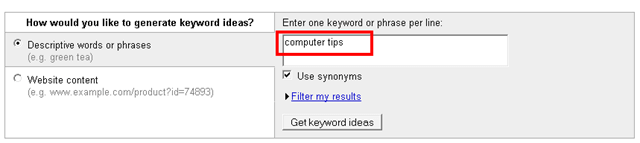
For example, if you want to optimize a website about “computer tips” you should see how many searches for the keyword are being submitted to Google monthly so you can have an idea if readers are looking for you or not. You can do that by going to external Google Keyword Tool:

https://adwords.google.com/select/KeywordToolExternal

Enter the keyword or phrase that you want to analyze then click Get keyword ideas:

image

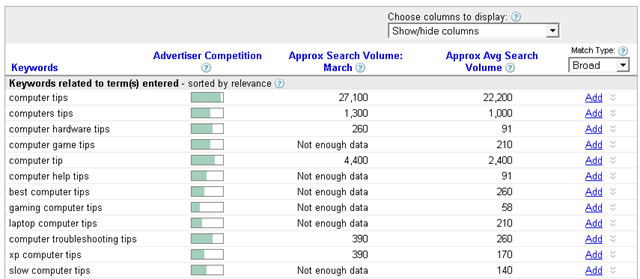
You will see a tabular report of all related terms along with the search volume generated for the previous month and the average search volume.

image

In this report you will see if you are using the right keywords based on the Google search database. If you think you should target “computer tip” instead of “computer tips” then think again because the difference on the performance of each phrase is about ten times for “computer tips” (22,200 VS 2,400).

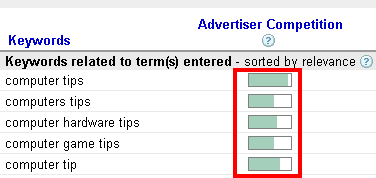
Also take note of the advertiser competition information, the longer the bar the more fierce the competition:

image

If you are a starting up a new web site and the competition is strong, it is a good idea to start with keywords with less competition then work on those higher volume keywords later.

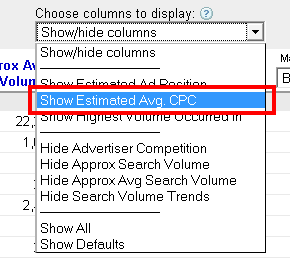
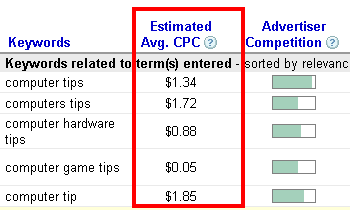
Another cool feature of this tool is that it can show you the average cost each time a user clicks your ad on the associated keyword. To add the estimate cost per click (CPC) column on the report, go to the dropdown selection labeled “Choose columns to display” then click “Show estimated Avg. CPC”.

image

You should see the CPC column on the report:

image

Isn’t it a very convenient way to analyze your web site’s earning potential? This way you can earn more money by targeting keywords with higher CPC. Well, that is of course if you can make them come to your website. We will show you how to do just that in the future articles as we go into more in-depth SEO tips.

Read More..

March 30, 2009

How to find a Good Internet Marketing Affiliate Program and database web design?

. March 30, 2009 .

Search engine play a vital role in internet marketing. Search engines are the primary marketing tools in this current business trend. The real success for your business and for your website lies in being search engine friendly. Nearly 90-95 percent of online transactions are succeeded by means of some top search engines only. The success or failure of a business completely relies on the website design. The more search engine friendly database web design, the more leads to your business.

Search engine optimization is not as simple as implementing meta keywords for each and every page. Top search engine placement is always a dream for those who think so. As a professional Search Engine Optimization Web Design Company, we implement all our SEO efforts, SEO strategies for your website’s prestigious search engine ranking. We make use of custom SEO tools for a professional website design.

The search engines or even web browsers can estimate the potentiality of your website by just going through your website’s home page. The content of the home page should be in such a way, that it makes the visitor mesmerising. After visiting your site, one should end his desired transaction there itself without a second thought. We will try our level best to implement the said strategy. Our web sites can be designed with full ecommerce facilities such as shopping carts and secure online payment facilities. We have experience of developing very large database driven site capable of supporting many coincident users.

We can develop database systems of any size from small access databases to large intranet/internet databases. We usually advocate the use of browser based database systems due to their flexibility. These do not require a connection to the Internet to function but can be run on any machine using a web server. The advantage of such a system is that they can easily be used to construct a database driven website at a later time.

Get you found specilaises in database web design. A database driven web site, as the name implies, uses a database to store the content of the web site. The web site may consist of a number of normal HTML pages and a number of templates. As these templates are displayed, code embedded in them queries the database and retrieves data which in turn is displayed within the template.

Get You Found offers and Internet consultancy service. If you are looking to get an online presence or just wish to develop your Internet strategy our experience can help. We understand that every customer's requirements are different and we offer unprejudiced advice on Internet related matters.

We build website designs with creativity and e-business in mind. Knowing that a boring web site development will be quickly ignored, our website design team shapes and molds a layout to control the viewer's focus and attention without overloading them. Simplicity is key. With a set structure, production moves ahead until the site is ready for testing and editing.

An internet marketing affiliate program is either an individual or merchant company that is willing to pay you a commission for selling their product or service for them. Some affiliate programs can be marketed offline, as well as online, however, most are designed to be put in front of internet audiences.

You would think that finding a good internet marketing affiliate program wouldn't be that big of a deal, however, there are definitely good affiliate programs and bad affiliate programs online, so it's very important that you get a "heads up" so you don't get ripped off.

There are, of course, many different methods of marketing affiliate programs. The most popular by far is email marketing. Email can send your marketing message to all four corners of the world in a matter of seconds, providing that it can get by the spam filters employed by most internet service providers. Another method for promoting an internet marketing affiliate program is by using pay per click advertising.

An affiliate program is one of the modules from internet marketing to generate inactive income. How it works is the website owners will pay a certain amount of commission to the affiliates for fetching traffic to the advertiser website or for subsequent dealings. These websites are owned by people and are called merchants, the ones who technically operate the affiliate program. You can join an affiliate program for free and start promoting the product immediately. A great affiliate program can go a long way in bringing revenue to a site.

Developing and managing an affiliate marketing program effectively could give you a real boost in your business results. Use these resources to learn how to plan and manage your affiliate marketing campaign. A successful affiliate marketing program takes time to build, but with a bit of effort it has the ability to increase your Internet sales noticeably. Learn how you can create a successful affiliate marketing program for your products and services. There are several ways that you can market an internet marketing affiliate program online.

Resource Box:There are several ways that you can market an internet marketing affiliate program online. database web design is the design of web pages, websites and web applications using HTML, images, and other media.

Read More..

21 Great SEO Tips From Google's Matt Cutts

.

This is a compilation of stuff Matt Cutts has said historically, I decided I'd dig backwards and document some of the older stuff. I dated it accordingly.

Here it is:

1. http://www.mattcutts.com/blog/dashes-vs-underscores/Matt recommends using dashes over underscores to delimit words in urls. 2005.Google does not algorithmically penalize for dashes in the url despite the fact that some have raised it as a possible heuristic for spam detection. I think WordPress pretty much precludes this anyway. 2005.


2. http://www.mattcutts.com/blog/seo-mistakes-sneaky-javascript/Google takes action on individual instances of spam when they find it, but they focus on creating better algorithmic solutions. He states that he would not recommend using sneaky JavaScript redirects because your sites may get nailed in the near future. 2005.


3. http://www.mattcutts.com/blog/whats-an-update/Google updates their index data — including backlinks and PageRank all the time. However, they export and publish new backlinks and PageRank data approximately every three months. New backlinks and PageRank are meaningless — it is not an update. The information is likely already factored in for awhile before you see it. 2005.


4. http://www.mattcutts.com/blog/seo-mistakes-nearly-hidden-text/Hiding text using similar colors and background colors can actually be worse than using the same colors. Using “#EEEEEE” instead of solid white on a solid white background can look worse — as if you’re trying to hide it. I suspect this is a heuristic for detecting hidden text. 2005.


5. http://www.mattcutts.com/blog/q-a-thread-march-27-2006/If you sell links, Matt says you should use link condoms. Otherwise your reputation may fall. I assume this means they will devalue your outbound links. 2006.


6. http://www.mattcutts.com/blog/guest-post-vanessa-fox-on-organic-site-review-session/Googlebot can only crawl the free portions that non-subscribed users can access since it does not log in. Therefore, be sure to excerpt material in the free version that that offers value. Vanessa Fox. 2006.


7. http://www.mattcutts.com/blog/guest-post-vanessa-fox-on-organic-site-review-session/If you must use Flash, you must also make an HTML version available as well. Block the Flash version from the crawlers with a robots.txt file. Vanessa Fox. 2006.


8. http://www.mattcutts.com/blog/guest-post-vanessa-fox-on-organic-site-review-session/Use user-friendly URLs like "african-elephants.html," and not "343432ffsdfsdfdfasffgddddd.html." Don't overdo it either — african-elephants-and-their-habitats-etc-etc-etc-etc.html. Vanessa Fox. 2006.


9. http://www.mattcutts.com/blog/guest-post-vanessa-fox-on-organic-site-review-session/Assign unique, descriptive

10. http://www.mattcutts.com/blog/guest-post-vanessa-fox-on-organic-site-review-session/Minimize the number of redirects upon hitting a URL. Vanessa Fox. 2006.

11. http://www.mattcutts.com/blog/guest-post-vanessa-fox-on-organic-site-review-session/Minimize the number of URL parameters — 1-2 parameters if possible. Vanessa Fox. 2006.

12. http://www.mattcutts.com/blog/guest-post-vanessa-fox-on-organic-site-review-session/Don’t use a parameter named “id=” in a URL for anything other than a session ID. Otherwise, it may not be included in the index. Vanessa Fox. 2006.

13. http://www.mattcutts.com/blog/guest-post-vanessa-fox-on-organic-site-review-session/Earned-links are earned and given by choice. Google does consider buying text links for PageRank purposes to be outside our quality guidelines. Vanessa Fox. 2006.

14. http://www.mattcutts.com/blog/google-analytics/Blackhat SEOs may be leery of using Google for analytics, but regular site owners should be reassured. Vanessa Fox. 2006.

15. http://www.mattcutts.com/blog/text-link-follow-up/Google’s is against selling/buying links, and Matt indicates they are good at spotting them — both algorithmically and manually. Sites that sell links can lose their trust in search engines. 2006.

16. http://www.mattcutts.com/blog/seo-mistakes-spam-in-other-languages/Google is focusing on detecting spam in other languages in 2006 — Italian, Spanish, Chinese, etc. 2006.

17. http://www.mattcutts.com/blog/seo-advice-discussing-302-redirects/External (domainA -> domainB) 302 redirects are largely treated as 301s now. 2006.

18. http://www.mattcutts.com/blog/seo-advice-url-canonicalization/Canonicalization is the process of picking the best url when there are several choices, and it usually refers to home pages — http://www.example.com/ vs. example.com vs. www.example.com/index.html. Since all these urls are different, a web server could return completely different content for all the urls above. When Google “canonicalizes” a url, it tries to pick the best one and elimintes the others. To help Google, link to resources on a site consistently, and use 301 redirects to enforce it. 2006.

19. http://www.mattcutts.com/blog/seo-advice-url-canonicalization/Do not use the URL removal tool to remove domain.com if you are worried about URL canonicalization and have both domain.com and http://www.domain.com/ in the Google index. This will remove the entire site. 2006.

20. http://www.mattcutts.com/blog/seo-advice-url-canonicalization/Search engines can perform canonicalization for things like keeping or removing trailing slashes, upper vs. lower case, or removing session IDs from bulletin board or other software. 2006.

21. http://www.mattcutts.com/blog/sitemaps-interview/404s (Gone, but may reappear) are treated the same as 410s (Gone, but will not reappear). Most web masters use 404s as 410s anyway. 2006.

Following these tips will probably help you rank better, so long as you actually trust Matt Cutts. I'd assert it's wise to approach some of his advice with skepticism, since I'm sure Google gives him guidelines as to what he can actually say, but following the advice above won't get you into any trouble.

Read More..

March 29, 2009

Search Engine Optimization And Meta Tags And Search Engine Submit

. March 29, 2009 .

Every search engine uses it’s own, very specific algorithm to index the websites. All major search engines keep updating their search algorithms quite frequently to give their searchers the best searching experience. Your website’s place in the search result pages depends on it’s calculation from the algorithm it follows. These algorithms are not changing everyday but are evolving into more intelligent and accurate. Yet, the major focus is on the Meta tags of the site.

Site Submission

These Meta tags are not visible when someone browses your web page but the search engines read these Meta tags alone and decide the place of a web page on its search result pages. It does so by finding the relevance of the Meta tags within them and with its contents. The most important Meta tags are the title, description and keywords. The first thing a search engine looks for is to find a relevance in these meta tags by looking at the keywords used in them and secondly it looks the relevance of the keywords used in these meta tags with the contents of the page.

Increase Website Traffic

The Title Tag

The title is the most important Meta tag of your website. This is the first thing shown on a web page and this is visible to both your visitor and most importantly to the search engine. That’s why it has to be given the utmost importance while search engine optimization is the consideration.

It is always depicted on the left top bar of in the browser window. This tag should include the most relevant keyword about your business. If the most relevant keywords are used in here, your web site will sure get a boost in a search.

Most websites use their company name in the title which in fact, is not something desirable. Because, nobody usually searches for a company name unless it is very well known or some giant multinational.

The perfect title tags should be something between 10-70 characters. It is not so that one can not put a longer title but the search engine would ignore the longer part of the title.

The Title tag should be written for the visitors (people searching for your business or services) first and the search engines second. This should be such as to motivate a click and obviously to favor the search engine indexing too.

Different title tags should be assigned to each page of your website containing its own keywords that relate to that specific page.

Description tag

The description tag should be written in such way that it speaks about the website contents in just one or two sentences.
It should be short and clear that your visitors get a close idea about your site by reading this in a short time.

The description tag should be 100 to 200 characters long. The Meta description tag also has a great role in the SEO of your page. This tag displays the information at a search engine result page (SERP) after a search is performed by a user. So, this should be such as this puts the concise summary of your page. Most search engines truncate longer Description. Remember this while writing this tag.

Same as above every page should have a different description tag in accordance with the contents it holds. This tag has quite some effect on the ranking of your site in Search Engine results. The Search Engine will read your description tag and will check if the keywords or search terms match your title tag and content of your web site. My suggestion is to take the first sentence or two of the contents from your web page and use that for the Meta description content.

Include the most relevant sentences matching with the page contents in description tag instead of stuffing the tag with more keywords. Remember that the Meta Description Tag of a web page must not look just a bunch of keywords, but should contain an informative and concise summary of your web page.

Keywords Tag

The most heavily sought technique in Search Engine Optimization process is Keyword optimization. But at the same time if keywords are too often repeated, chances are that the site gets marked out as “”spam”". However, if your target keyword are not included enough, its ranking will not be optimized. So, with present algorithms which are really smart and intelligent include only those relevant keywords you want to target and make sure that these are included in the contents too.

Use variations of a keyword like watch, watches, wrist watch etc. They are slightly changed keywords and yet don’t render any feeling to the search engine for their being repeated in the tag.

Geographical information (name of the country, city or place) may be used in the keywords. Sometimes it plays a great role when a search is made for a location based business. Or, even brand names, model name of a product can be used in this tag. That also helps when a search is made for a specific product model or brand.

Search engines give different weights to the keywords according to their positions in HTML tags used in the content. For example if a keyword is used in this tag which is present in Heading Tag also has more weight particularly when the same is in H1 tag.

Write your Alt tags of the images and the text links being used in the page such that it includes at least one keyword from the keyword tag. But, remember the same should look just relevant with the image or the hyper link for which it has been written.

The content should have included all of your keywords. The aggregate keyword density (all the keywords used in keyword tag) should be between 20% to 30% but not less than 5% to the best optimized results. However, Density for a single keyword should not be less than 2% and higher than 6%. The best is about 5% with the major keywords and 2% with subsequent keywords.

The Meta tags should be fine tuned with the contents and a good relevance is brought about between themselves with a perfect balance between the target audience and the search engines.

These Meta tags have been used really very un-carefully by the spammers, if we commit to use them methodically with the due respect, I hope, we should be able to create ever increasing web traffic on our sites.

Don’t forget to submit your site to all the search engines on the internet.

Grab expert tips about web traffic - your personal knowledge base.

Read More..

March 28, 2009

Top 6 Fool-Proof Steps to Make More Money With Your Website

. March 28, 2009 .

Every website has a bunch of web pages which get more search traffic than others. These pages are constantly visited daily by new visitors, people who have never seen the site in question before. I call these ‘money pages’ because they are a reliable source of immediate and future income.

But they’re not just ‘money’ because they bring in revenue: they are one of the easiest ways to grow your audience without much work. If you learn how to optimize these money pages (its not hard to do), you’ll really improve your website in so many ways. More revenue, more members, more influence and authority. Doesn’t that sound good?

I’ve talked very briefly about money pages in my previous post on analyzing your site visitors and decided to expand a little more on this topic because I think its often overlooked by webmasters. We’re always focused on creating new content and getting new visitors to these new pages that we forget about what’s going on in other parts of our website.

This is tailored towards content publishers and bloggers but the main strategies here apply to other site types as well, you just need to find the right tools to do it. So lets get started.

How to Optimize Your Money Pages

money-pages
Image Credit: marissa cap

There are many things you can do to money pages, in order to make them better or more profitable. It’s important to decide the extent of your work according to your goals and resources. How much time do you want to spend and what’s most important to you? Do you want a bigger readership? Or are you just concerned with increasing your daily revenue?

Here are a list of things you can do for your money pages:

  1. Monetize. The aim here is to get more revenue out of each page. There are various ways to achieve this and they generally involve the placement of ads both around and within content. There is also an indirect future revenue from lead capturing.
  2. Capture Leads. The money page is optimized to encourage a visitor to subscribe to your mailing list, site feed or register for your website. The main aim is to find a way to continue to reach your visitors after they leave your money page. This helps to grow your site audience and is also a component of revenue generation.
  3. Improve Relevance. This involves revamping the money page in order to provide up-to-date information or better content in order to accommodate visitor needs. This provides an improved user experience for all and can result a host of benefits like more referral/citation links and greater visitor loyalty/trust. Relevance is also important when your main goal is to capture leads or increase revenue.
  4. Make it Rank Better. Doing on-site and off-site optmization will help specific money pages to rank better on the search engine result pages, hence driving more traffic back to your site. This increases your site reach and revenue at the same time.

Step 1: Find Your Money Pages

monetize
Image Credit: TW Collins

Open up the web analytics program you’re using for your website. There should be a section which reveals which pages have the highest unique views per month. Extract the urls for the top 10 pages and put them somewhere for easy access. Or bookmark them on your browser. If you don’t currently use an analytics tool, I recommend setting up Google Analytics.

How many pages you choose to optimize really depends on your website and preference. If you have a lot of webpages that get solid traffic, you can do more. If you don’t have many pages that get web traffic, then you have a lesser amount to work with. I like to focus on the top 10 because if its a manageable amount of work for an acceptable returns on investment.

My personal guideline is to only work on pages with a minimum of 200 unique views everyday. It’s a basic number that’s good for some decent conversions. Adjust this figure to something you can work with, if your website is new or gets less overall traffic.

The point to remember is that not every page is hot. The goal is not to optimize every single web page you have. There has to be a limit. So learn to prioritize and work only on the pages that are currently receiving the most traffic to your website.

Step 2: Improving Content Relevance

relevant-content
Image Credit: jesse.millan

Visitor search queries reveal what people are looking for and what they want to get from your web page. It tells you what information they expect and is a way to understand their desires or needs. Many are ready to pay for a solution or subscribe to get knowledge in their inbox.

Better relevance = better conversions. It’s that simple. By making your website as relevant as possible to search queries, you’re making visitors more likely to stick around, opt-in or buy. Users are going to click away if they find that your web page doesn’t fulfill their info needs. So the first step is closely examine your money pages in relation to search traffic terms.

My goal is to include every search query in my money page. Every question typed into search engines by visitors who access my site must be answered. One very easy and quick way to do this is to add a simple FAQ to the page to address the visitor’s specific needs. Just phrase the same exact search query as a question. Then write an answer which responds to it.

Another method for search query relevance is to create new content and insert it into the money page. It’s important to edit your pages so that it doesn’t display content that is simply outdated or useless. You’re not going to presell anyone with stuff like that. It won’t work.

Either rewrite the entire money page or include update notes specifying new information and linking to other pages on your website with newer content. Whenever new information or changes occur due to changes, go back into the money page to make necessary adjustments. This is one reason why I asked you to keep those 10 URLs bookmarked or easily accessible.

Note that by increasing your money page’s relevance and informational value, you are also increasing its linkability: People are more likely to link to it because it is a detailed and useful reference page on the topic. Whenever possible, I try to fashion my money pages on blogs after Wikipedia in terms of comprehensiveness.

Step 3: Monetizing Your Money Page

money-optimize
Image Credit: Gaetan Lee

While you can monetize your money page and capture leads at the same time, I find it better to optimize for one goal instead of trying to achieve both. Because when it comes to monetization, captured leads are usually a good source for long term income anyway.

There are formats for each goal (monetize or lead capture) and you’ll get better results if you either choose to monetize fully or go all out to hook your visitors by making them sign up or subscribe to your website. If you put up too many well blended ads, the visitor can easily click away instead of subscribing to your newsletter, so either pick one goal or balance both.

Let’s talk about monetization first. This is easy if you’re using ad networks like Google Adsense. Go to your money page and insert an additional ad unit, blend it well with your content and make sure that its quite visible while not being too obtrusive.

A well placed Adsense unit can really increase your overall daily income. I’ve seen a jump of more than $20 a day for a site that I own when I took the time to test and optimize a few money pages. While you may have default ads already on every page of your site (sidebars, header etc), these may not be truly optimized for a money page.

Money pages need to be treated differently from the other pages on your website. They’re the ones that bring a lot of visitors (big sample size) so you can really use this opportunity to test the profitability of specific ad schemes. You can even remove the default ads specifically for this page so you have more room to experiment. That’s what I do for some sites.

Other ways to monetize include the use of commission-based affiliate programs which range from digital products to established eCommerce retailers like Amazon.com. Clickbank is a digital product marketplace you can use. Sign up, search through the marketplace for a product, grab your affiliate link, insert it on your money page.

You can also try CPA networks with relevant pay-per-lead or pay-per-sale programs. Commonly used CPA networks are Market Leverage, Max Bounty, NeverBlue, PepperJam, Copeac, Azoogle and Hydra Network, among many others. Affiliate programs can work well but remember to keep them related to your content.

Alternatively, you can promote your own products on your money page by including a short pitch for it and linking to a proper sales page. Or you can try to sell your visitors away from the money page by getting them to first subscribe to an email list. This brings us to the next step.

Step 4: Optimizing to Capture Leads

free-offer
Image Credit: sindesign

The goal is to capture not just the email of the visitor but his/her permission to allow you to reach them away from your website. For some of you, you want visitors to subscribe to your RSS feed so they’ll continue to read your content or hopefully participate on your site.

Many set up email lists and auto-responders with the aim of eventually monetizing by selling their own products or recommending those of JV partners. Their aim here is to get users to opt-in to receive newsletters or special offers. The same goes for online retail stores.

Good email marketing providers are Aweber and GetResponse, both of which charge a monthly fee that you should be able to earn back easily. There are free alternatives available but you’ll often lose out in terms of features. If this doesn’t bother you, you could try starting with any of the free email software or plugins available.

To optimize a money page to capture leads, you’ll need to do some offer customization. Look at what content/product is on the page and create a specific offer that’s relevant to it. Provide an incentive for someone to sign up: perhaps a free digital product with related or more in-depth information. Or simply the promise of future discounts or special product offers.

To get into the mind of the visitor and understand what entices them, you’ll need to go back to the search queries you’re getting. If someone is interested in ‘what causes wrinkles’, you’ll know they’ll be interested in an ebook on natural anti-aging remedies. Do up a free guide and offer it to them only if they register as a member or sign up to your email list.

How about lead capture for communities and membership sites? Apart from providing incentives you can use teasers. Restrict visitor actions by only allowing them to view a limited amount of content or interact in a limited fashion. This limit will be removed when a user registers with your community. These are methods commonly practiced by paid membership sites, forums and social media sites to entice signups.

Step 5: Sending Internal Traffic to Your Money Pages

traffic
Image Credit: leeds at night

Now that you’ve optimized your money pages for maximum conversions, you can also send over visitors from other pages of your site. You’ve already done the work to make the pages incredibly relevant and usable, they shouldn’t just be seen by search engine visitors.

If your money pages are related, by sure to interlink each one so that each visitor is funneled to another optimized page. This not only improves your bounce rate but makes sure that each visitor is given two opportunities to convert if they aren’t persuaded the first time around.

Another method is to use a script to autolink specific anchor keywords or phrases on your entire site to the specific web page. This helps with SEO and is very easy way to get more eyes on your money page. If you’re using Wordpress, try the Internal Link Building plugin or the SEO Smart Links plugin. Both help to auto-link keywords on every page of your blog. There are quite a few similar plugins out there but these two work well for me.

If you’re a blogger producing content daily, endeavor to link to the money pages whenever it’s pertinent to your post because you’re driving traffic to pages that will perform well. Alternate the links to each money page so your audience won’t get sick of seeing them all the time.

There is an alternative way to highlight your money pages: Group the ones about a similar topic together and list them all in a reference page, which will funnel traffic out to different locations. Instead of linking to each individual money page, you can just link or promote the reference page, which will then direct the visitors you get to each money page simultaneously.

A simple example of this is my reference page on social media marketing, which collects both money pages and less visited pages together under a specific theme. There’s also the option of creating special banner ads or images to link to either your money page or the reference page, it doesn’t always have to be promoted in the form of a link within content.

Step 6: Improving Your Search Engine Ranking

search-engine-ranking

This is the final step in the process and should always come after you’ve optimized your money pages for maximum results and set up a method to promote it internally on your site. After you’ve done all that, it’s time to look at boosting a major factor for earning more money: your website’s ranking on the search engine results pages (SERPs).

This is an optional step because if you’re getting a lot of visitors, you’re should already be ranking quite well. But if you’re on the second page of Google or not yet in the top 3 queries for a keyword/phrase that is sending you a good amount of traffic, why not bump it up and get even more visitors per day?

You’ve already got your list of top money pages based on search queries. Now you should find what these pages are ranking for, which is something you can easily discover through your stats trackers. If you’re already using it, Google Webmaster Central is a free tool that shows you the top 20 search queries visitors use to reach your site.

Off-Site Search Engine Optimization

SEO is a pretty big topic: its hard to cover everything that needs to be done so I’m going to simplify it into one fool proof method of improving your search engine rank for Google. This is something that is unanimously agreed upon by everyone.

All you need to do is get links from other sites, especially with the specific anchor text you are trying to rank for. But not just from anywhere. You want links from quality, relevant websites.

Let’s see what Google itself says about ranking:

Sites’ positions in our search results are determined based on a number of factors designed to provide end-users with helpful, accurate search results. In general, webmasters can improve the rank of their sites by increasing the number of high-quality sites that link to their pages.

One more. From Google’s warning on link schemes:

Your site’s ranking in Google search results is partly based on analysis of those sites that link to you. The quantity, quality, and relevance of links count towards your rating. The sites that link to you can provide context about the subject matter of your site, and can indicate its quality and popularity.

It is not only the number of links you have pointing to your site that matters, but also the quality and relevance of those links. Creating good content pays off: Links are usually editorial votes given by choice, and the buzzing blogger community can be an excellent place to generate interest.

Links matter a lot because Google’s algorithm is set up to use the collective intelligence of the web to determine a page’s importance. High quality links boost the trust, relevance and authority of your web page. This is somewhat the same for search engines like Yahoo or Live.

Ideally, the best type of links you can get are from the websites that are already ranking well for the keyword or phrase you are targeting. But these links might not be easy to acquire, since you’re likely to be viewed as a competitor and a threat.

So, what I personally like to do is to do some research on the people ranking for your keyword/phrase on the first two pages. Dig into their backinks by using something like Yahoo Site Explorer and find out who is linking to them. Try to get those same links if possible and even more quality links that your competitors don’t have.

There are many ways to build links, some are blackhat and others are more compliant with search engine guidelines. As I’ve mentioned in my previous post on long term social media marketing, I favor the strategy of creating valuable services, tools and content in order to attract links from bloggers. It’s stable and works extremely well for every niche out there.

If your money page is optimized for relevance and is high on informational value, it is already a potential link magnet. So here’s something you can do immediately. Send email pitches about your money page to relevant blogs. If you contact 1,000 blogs, you might easily get 50 to 100 extra Black links (or more), which may be enough for you to outrank other websites. Sometimes all you need to do is to get the word out.

And there are many other ways. Article directories. Blog/web directories. Social bookmarking websites. Social news sites. Social media communities (Flickr, Youtube etc). Contests. Link exchanges. Blog comments and carnivals. Donations/sponsorships. Forums. Press Releases.

On-Site Search Engine Optimization

finding-money
Image Credit: Mario de Leo

On top on link building, another aspect of ranking better is on-site search optimization, whereby you make your webpage compatible with search engine requirements and the specific search query you’re targeting. Google’s webmaster guidelines, Yahoo’s Webmaster Resources and Live Search’s Webmaster Center has a list of the most basic stuff you should be doing and ways for you to track your site in their search engines.

Basic pointers for on-site optimization involves having a good site architecture, where pages with similar themes are grouped together with a focus on great navigation and usability for visitors. On site-optimization also involves having your targeted keywords in the title tags and an appealing meta-description, which may affect SERP clickthrough rates. For the WP users out there, you might find this excellent guide to Wordpress SEO useful.

Other on-site factors include keyword density, which is the number of times a keyword appears compared to the total number of words in a page. And latent semantic indexing (LSI), which examines a page in relation to groups of associated words/terms used within it.

I wouldn’t worry too much about latent semantic indexing and perhaps even keyword density because a content heavy page is likely to include the associated terms and keywords naturally, because of its depth. The main point to note is to maintain a tight focus on your chosen topic and not divert too much from it in your content.

And then there’s the controversial topic of PageRank Sculpting: using the nofollow tag on internal site links to optimize the strength of specific pages, thereby enabling them to rank better in search engines. Perhaps a useful tactic, although one that isn’t quite necessary. Any possible success here partly depends on how knowledgeable you are with SEO.

On-site optimization isn’t a difficult process, as long as you have a good site architecture set up from the start and follow search-engine guidelines. The hard part is really the task of getting people with relevant/quality websites to link to your money pages.

Time for You to Do Some Work…

These are the fundamental factors involved in optimizing your money pages. After completing the first step of finding your money pages, you don’t need to work on the other steps in a sequence. As I’ve said earlier, it depends on your goals. Personally, I go through all six steps when I’m looking at money pages that receive a substantial amount of daily web traffic.

The good thing about money pages is that once you optimize them, you can just leave them alone for a while. If you’re busy every day, you might want to spend an hour during the weekend on your money pages. Or just assign them to a colleague or a member of your staff. Set aside some time to optimize them and you’ll definitely see the results.

If you found this article useful in any way, please consider linking to it or sharing it with others. I’ll love to hear your comments as well!

Read More..
 
Home | About | Contact | Advertise | Wholesale Clothing